
Chess and the Body
The Royal GameDr B’s shifting physical symptoms reveal the cost of forcing the mind to remain inside chess.
increasing Bearing strength in each event
 decreasing
Bearing strength in each eventdecreasingA Mind Rebuilt
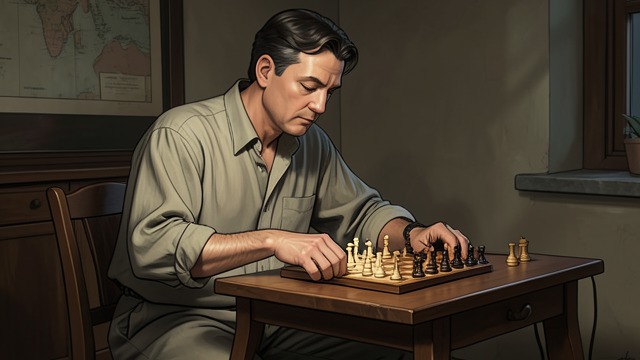
Concentration as Recovery
A structured occupation
Playing through the chess almanac gives Dr B a fixed task in a life otherwise emptied of routine. The repeated mental work restores a sense of precision.
Improved resistance
He believes the practice strengthens his ability to recognize false threats during interrogation. Chess serves as an intellectual refuge, but its benefit depends on the bounded nature of the exercise.
The Fever of Play
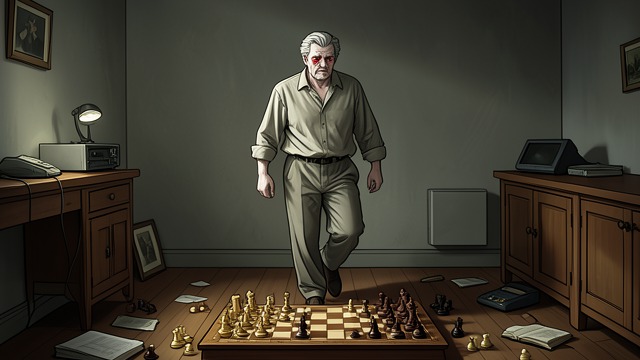
Thought Becomes Physical
Relentless activity
Dr B describes playing against himself from morning until night, unable to pause between imagined games. He paces faster and forgets to eat while thirst and exhaustion intensify.
Symptoms of collapse
Trembling hands, disturbed sleep, and feverish excitement show the body registering what the mind cannot contain. Chess has ceased to be a chosen occupation and become a compulsion.
The Scar as Reminder
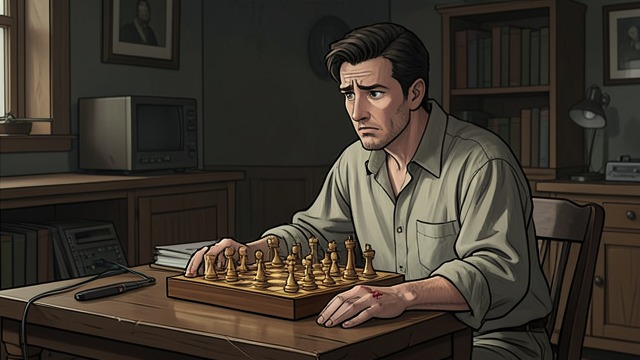
The Body Interrupts the Game
A returning crisis
Dr B’s mounting agitation culminates in an impossible claim about the board. The narrator notices the danger and uses the scar on Dr B’s hand to call him back to the present.
A safeguard against relapse
Dr B stops and apologizes, acknowledging that the game must end. The scar, once caused during his breakdown, becomes a concrete reminder that mental excitement has consequences beyond the chessboard.
During the first weeks of studying the stolen games
In the final months of confinement
During the second shipboard game
